What I Did
▫️Planning ▫️ Research (market & user) ▫️ Interview ▫️ Design
Solving the Food Delivery Puzzle in Nigeria
The rise of online food delivery has transformed the way people dine, especially in bustling urban cities like Lagos and Abuja. However, in Nigeria, the convenience of food delivery is often overshadowed by logistical challenges, unreliable service, and customer frustration. There is a need for a platform designed specifically to address the unique demands of Nigeria's dynamic food delivery market.

DKonet reimagines the food delivery experience by empowering customers with real-time tracking, bridging communication gaps between users and delivery agents, and creating an accountable ecosystem for vendors and agents alike.
Let's Take a Look at the Problem 😩
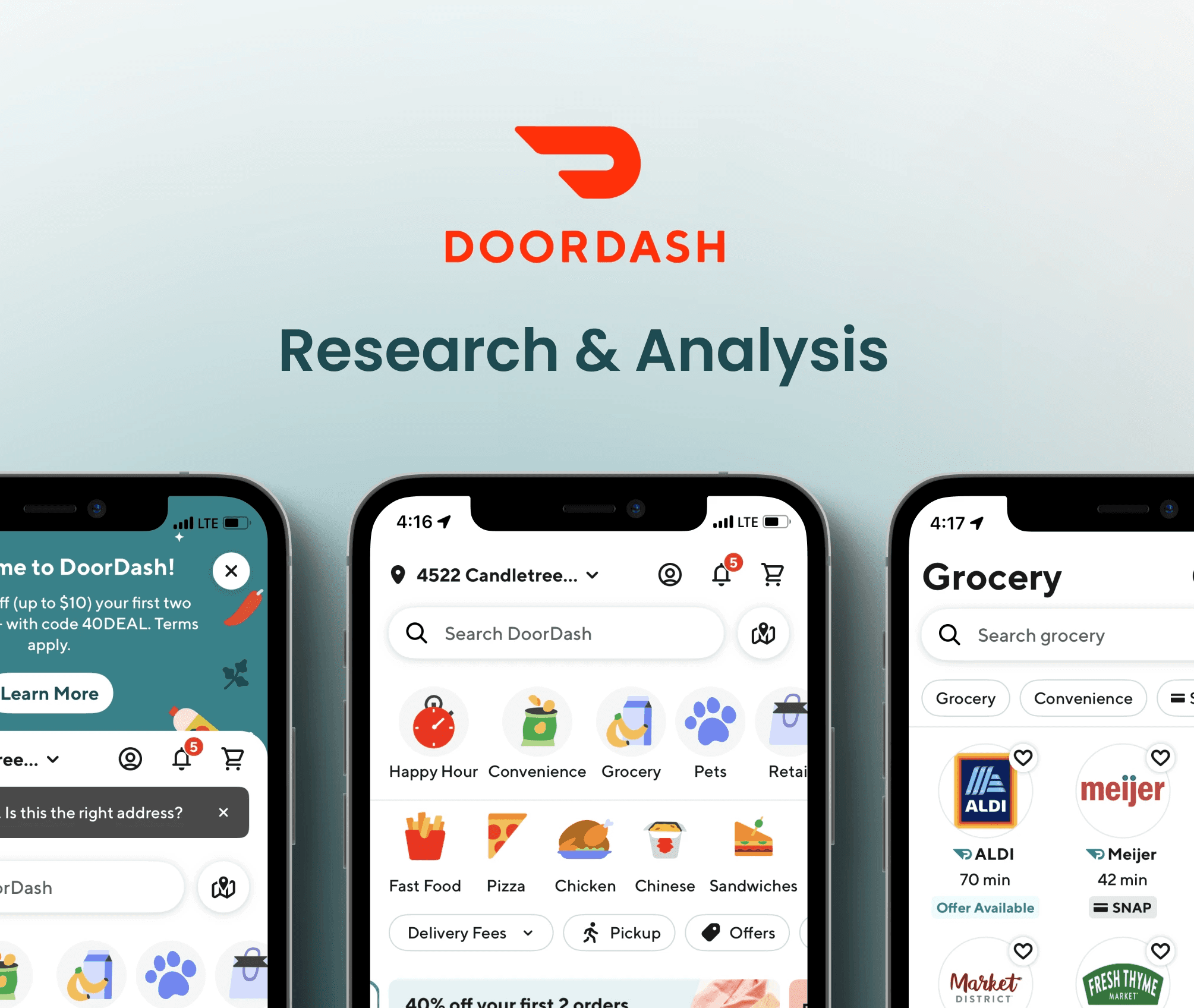
I conducted a comprehensive market research, which encompasses competitors and other factors affecting delivery in the cities mentioned above. Despite the growing popularity of food delivery services, users face recurring challenges that diminish trust and satisfaction:
Unreliable logistics: Poor road networks, unpredictable traffic, resulting in delayed delivery.
Lack of transparency: Customers are often left in the dark about order statuses and delivery agent whereabouts.
Communication gaps: Minimal or no direct contact with delivery agents to resolve real-time issues.
Limited usability: Existing apps have complex navigation that doesn’t consider the tech savviness of many Nigerian users.
These issues are worsen by the dominance of global players like Jumia Food, which often fail to address hyper-localized needs, and smaller competitors with inconsistent service quality.
Now…let's Understand the Actual Users 👥
Empathy first 🧘🏽
I began by immersing myself in the day-to-day experiences of typical food delivery users. I interviewed 12 individuals across Lagos, Abuja, and Port Harcourt, who regularly used food delivery apps, representing diverse demographics: students, working professionals, and households.
Why 12 interviews: I was recruiting and interviewing, and at 12 I got to a point of diminishing returns, where no significantly new insights emerge. With this data saturation, there was no point going further.
Key pain points uncovered:

Order tracking: A Lagos-based user said “Once I place my order, I feel like I’m blind until it arrives.” This was also confirmed by 9 other interviewee.
Delivery delays: Traffic and poorly planned delivery routes left users waiting far longer than expected––this validates the logistics findings in market research.
Agent communication: Another interviewee based in Abuja said “I can’t even call the delivery agent when they’re lost or late.” This too was confirmed by a few others.
Complex interfaces: Many apps failed to account for diverse user groups, leaving some struggling to navigate features.
These insights revealed a deep need for visibility, accountability, and simplicity in the food delivery process.
What's Next?
These insights from the market and user research, informed actionable design decisions:
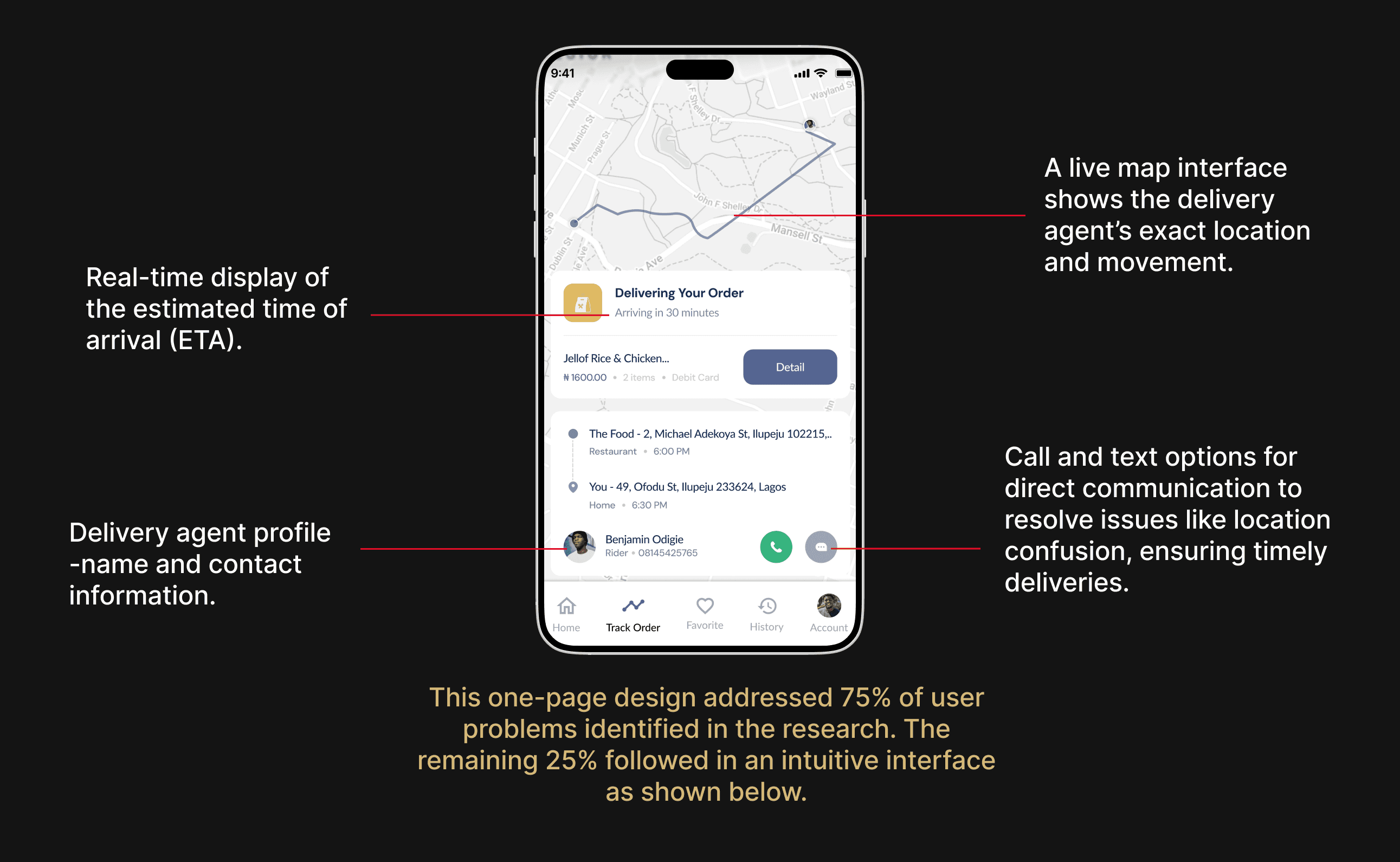
Introduced real-time tracking with an intuitive map interface.
Integrated delivery agent contact details for better communication.
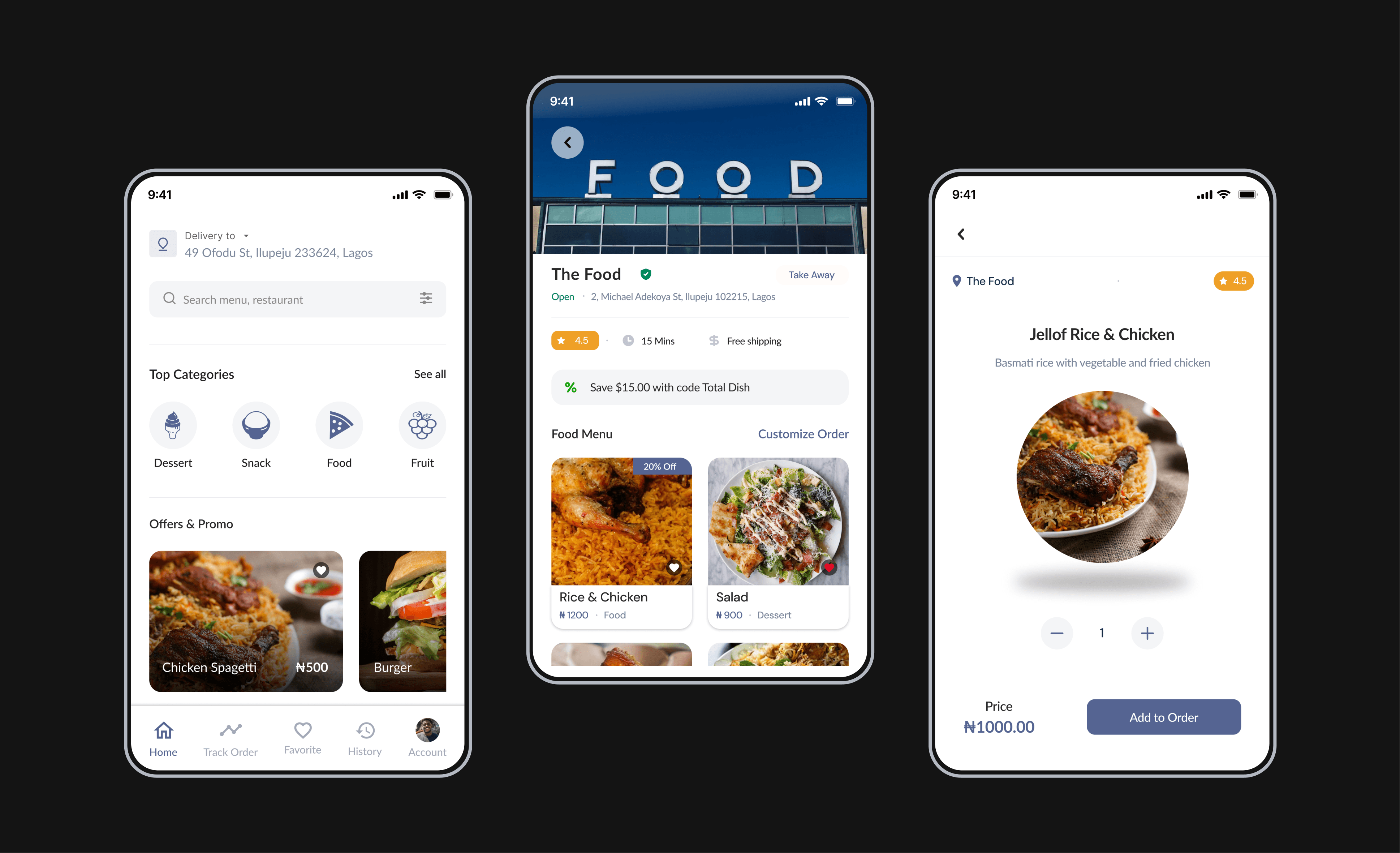
Streamlined the app’s navigation to outperform competitors in usability.
The design solutions successfully addressed three of the four key user problems: enhancing communication through direct agent contact, improving order tracking with real-time updates, and simplifying the interface for diverse user groups. To tackle the persistent issue of delivery delays caused by logistical challenges, we opted for a practical solution—prioritizing the use of bikes for delivery to navigate Nigeria's traffic conditions more efficiently. This holistic approach ensures a seamless and reliable food delivery experience tailored to the unique needs of Nigerian users
Here's how I Turned Data into Solution
Step 1: Mapping the Experience
I synthesized the research findings to map key user journey, a use class diagram that highlighted the interactions between three primary actors:
Customers: Seeking effortless ordering and reliable service.
Delivery agents: Responsible for timely deliveries and communication.
Vendors: Managing orders efficiently through a user-friendly interface.
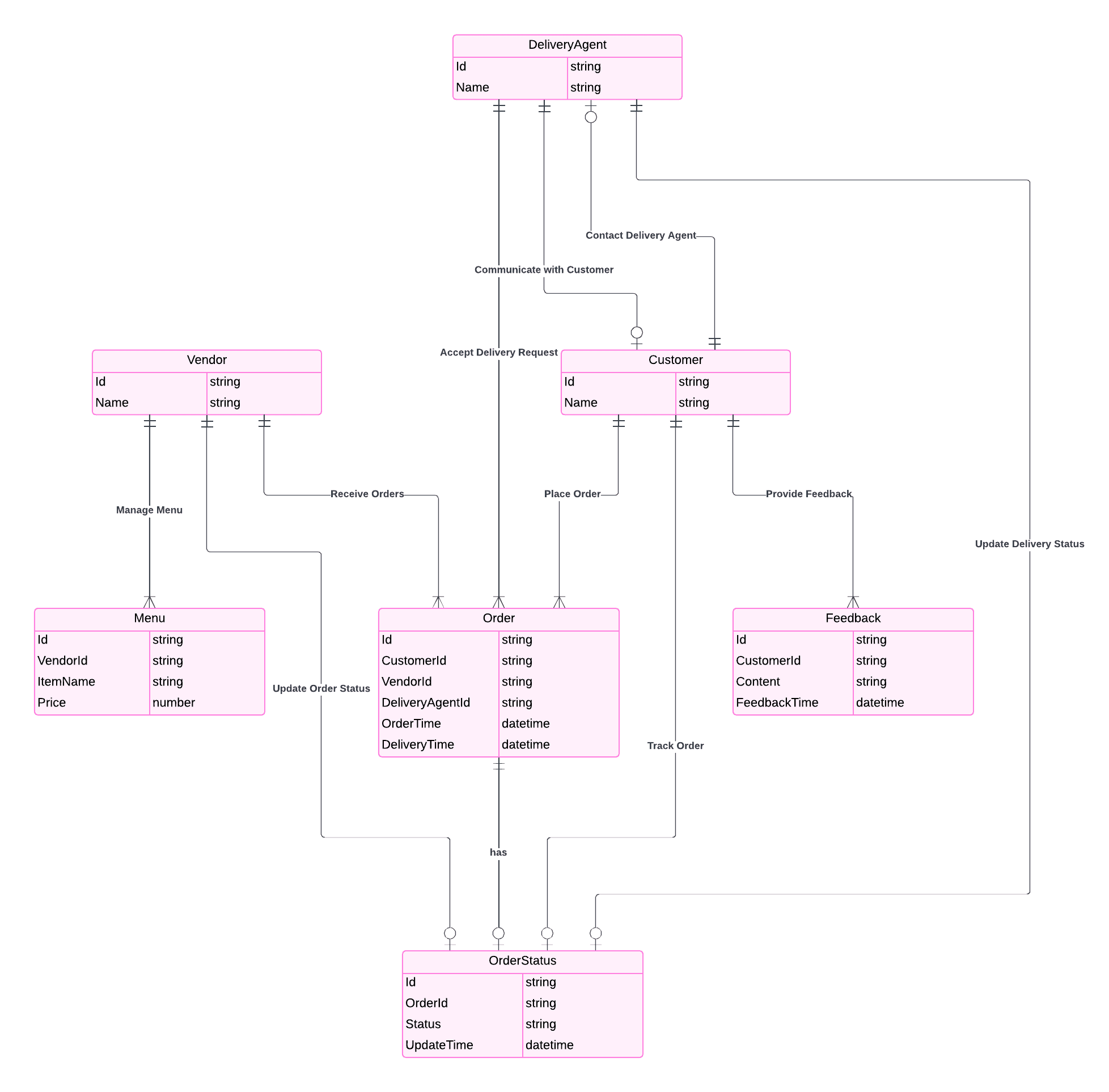
This mapping ensured that DKonet addressed the specific needs of each actor while maintaining a seamless ecosystem.
Step 2: Ideation and Prototype
Low-fidelity Prototypes
After several sketches, I moved on to low-fidelity wireframes to outline key features like the tracking interface, agent profiles, and simplified navigation. Early feedback from stakeholders ensured alignment with user needs.
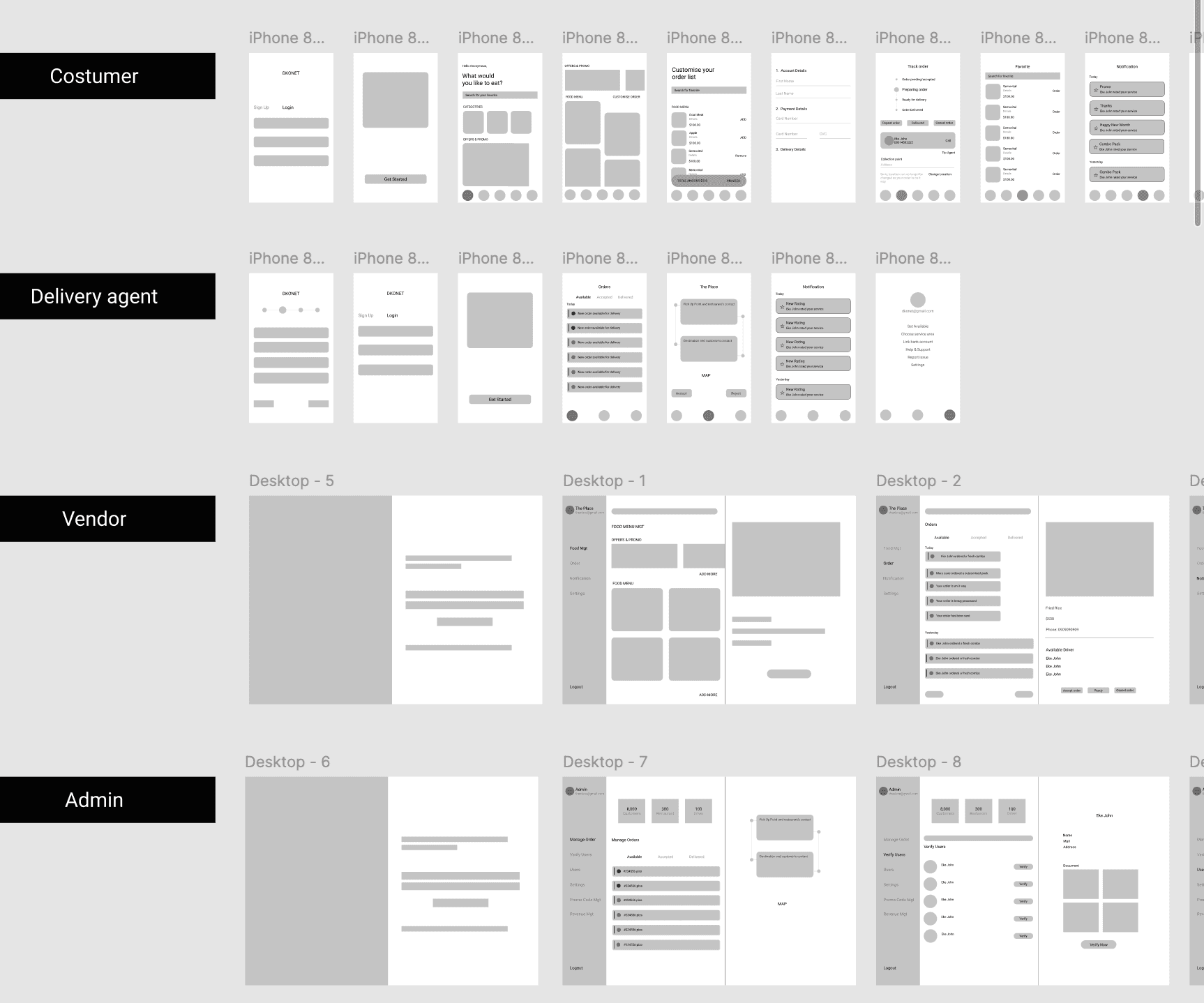
High-fidelity Prototypes
Building on validated wireframes, I designed polished prototypes that incorporated branding element, showcasing vibrant, local-inspired visuals to resonate with Nigerian users. Key features included:
Real-time order tracking.
Contact buttons for instant communication with delivery agents.
Simple, intuitive navigation menus.

Step 3: Prototyping and Testing
I developed a simple interactive prototype that demonstrated the app’s features, and tested it with selected users to validate:
Ease of navigation: Could users quickly find and use key features?
Order tracking responsiveness: Did the tracking feature meet expectations?
Satisfaction with communication: Were users satisfied with direct contact options for delivery agents?
Overview of the Solution
DKonet emerged as a platform that redefined online food delivery by addressing the most pressing user pain points:
Real-time visibility: The tracking feature gave users control and assurance.
Enhanced accountability: Delivery agent profiles enhanced trust and transparency.
Streamlined ecosystem: Vendors and customers benefited from an optimized interface, improving the overall experience.
More Screens




Impact and Reflections
DKonet successfully bridged critical gaps in the food delivery landscape:
Empowered users: With visibility and control over their orders, users felt more confident in the service.
Improved communication: Direct contact options reduced frustration and enhanced customer-rider-communication, thereby increasing user satisfaction.
Simplified vendor operations: Vendors could efficiently manage orders, enabling a robust marketplace.
Key takeaways
Empathy drives design: Understanding user frustrations informed every decision.
Iterative collaboration: Engaging stakeholders throughout the process ensured alignment with goals.
Focus on accountability: Real-time tracking and agent profiles addressed trust issues head-on.